
If You’re Always the Answer, You’re Part of the Problem

From Deal Hero to Sales Team Builder
By Markus Hesse, CEO – Hesse Consulting Group

You were probably promoted into sales management because you were good at selling.
You knew how to read customers. You could move deals forward. You had the confidence to handle difficult conversations. You knew when to challenge, when to listen, and when to close.
That experience still matters. But here is the uncomfortable part: the same strength that made you successful as a salesperson can become your biggest weakness as a sales manager.
If you are always the person joining the critical customer meeting, fixing the proposal, handling the negotiation, correcting the value story, and rescuing the deal at the last moment, you may feel useful. You may even be useful. But you may not be building a stronger team - You may be creating dependency.
Your role is no longer to be the best salesperson in the room. Your role is to multiply the performance of the sales people you lead. That shift is harder than most organisations admit. It requires you to move from selling to coaching, from solving to developing, from giving answers to improving judgement.
And in a value-based selling environment, this shift is not optional. Because your team does not become better at selling value because you tell them what to say. They become better when you coach how they think.
Your Real Job is to Multiply Performance
As a sales manager, your value is not measured only by the deals you personally help close. Of course, the number matters. Forecast matters. Pipeline matters. Revenue matters. Nobody is suggesting otherwise. Sales is not a therapy circle with quarterly targets attached. But the deeper question is this: Are you improving your team’s ability to perform without you? That is the multiplier test.
A strong sales manager does not simply push activity, inspect pipelines, and jump into deals when things get difficult. A strong sales manager builds capability.
You help your people think more clearly about the customer’s business. You help them prepare better. You help them ask stronger questions. You help them understand value, urgency, stakeholders, risk, and decision dynamics.
You do not just help them win one deal. You help them discover what is needed for them to become more effective salespeople and help them execute the changes required to improve performance.
That means asking yourself different leadership questions:
How do I help my team members to understand the customer’s business needs and priorities, not just our solution?
How do I improve the quality of their next customer conversation?
How do I help them create value from the stakeholder’s perspective, not just present features?
How do I build repeatable habits across the team?
How do I develop high performers without over-controlling them?
How do I support lower performers without taking over their job?
This is where sales management becomes sales coaching. And this is where your real leverage begins.
Stop Coaching Only the People Who Struggle
Many sales managers spend most of their coaching time with the weakest performers.
That is understandable. Underperformance is visible, painful, and urgent. When someone is missing targets, failing to progress opportunities, or struggling in customer conversations, your attention naturally goes there. But if you only coach the people who struggle, you are running a repair shop, not building a performance culture. Lower performers need coaching. They need structure, clarity, feedback, and support. They need to understand what good looks like, where they fall short, and what behaviours must change. But your solid and high performers need coaching too.

High performers may be winning, but that does not mean they have reached their potential. They may rely too heavily on instinct. They may win through personal charisma rather than repeatable discipline. They may have strong customer relationships but weak account growth. They may close deals while still leaving value on the table.
Do Not Confuse Performance With Full Potential
Your role is not to turn everyone into the same type of salesperson. Your role is to help each person grow from where they are now. For lower performers, that may mean stronger preparation, better questioning, clearer qualification, and more disciplined follow-up.
For solid performers, it may mean sharper opportunity strategy, stronger stakeholder mapping, and better value articulation.
For high performers, it may mean executive-level conversations, strategic account growth, peer influence, or helping others learn from what they do well.
If you only coach problems, you become a firefighter.
If you coach potential, you become a multiplier.
Value-based Selling Requires Better Coaching
Value-based selling raises the bar for your team. It is not enough for your salespeople to know their own product, present a generic value proposition, and respond to customer needs. They need to understand the customer’s business situation, identify value drivers, challenge assumptions, connect solutions to measurable outcomes, and help the customer make a better decision. That requires more than technique. It requires commercial thinking. And commercial thinking is developed through coaching.
A salesperson may know the official value proposition. But can they translate it into the customer’s context?
Can they connect the solution to cost, risk, effort, customer experience, or the customers goals?
Can they speak to different stakeholders in the language of their priorities?
Can they move from “Here is what we offer” to “Here is the business impact we can help you create”?
This is where you have massive leverage as a sales manager. Not by giving your team the perfect sentence. Not by rewriting every proposal. Not by jumping into every customer meeting to “show how it’s done”. Your leverage comes from coaching the thinking behind the sale.
Before a meeting, ask your salesperson:
What are the customer's current needs and/or issues?
Why is this a priority for the customer?
Who on the customer's side is involved in the outcome?
Who on the customer’s side are key people to contact and how can we create a compelling reason to talk?
What would make the customer change their current approach?
After the meeting, ask:
What did we learn?
What did we assume?
What value did the customer recognise/confirm?
What was left unclear?
What should happen next?
What would you do differently next time?
This is how value-based selling becomes more than a slide deck, a methodology, or a training event. It becomes a management habit.

Advice Is Not the Same as Coaching
You may think you are coaching when you are actually advising. There is nothing wrong with advice. Sometimes your team needs your experience. Sometimes they need a clear recommendation. Sometimes they need direction. But if your default mode is always advice, your team learns to wait for your answer.
That is dangerous. Advice sounds like this:
“Here is what I would do.”
“Push harder on the business case.”
“Ask them about the budget.”
“Send them this deck.”
“Bring me into the next meeting.”
Again, none of this is necessarily wrong. But it is not always coaching.
Coaching sounds different:
“What do you think the customer is really trying to achieve?”
“Where is the customer in their buying journey, and what evidence tells you that?”
“Which stakeholder owns the problem?”
“Which stakeholder can validate and quantify the benefits of a solution?”
“What happens if they do nothing?”
“What would make the customer change their current approach?”
“What do you want the customer to think, feel, or decide after the meeting?”
The difference matters. Advice gives the answer. Coaching builds judgement. Advice may solve the immediate problem. Coaching improves the person’s ability to solve the next one. That is the leadership shift.
Diagnose Before You Coach: The 4C Sales Coaching Diagnostic®
One reason sales coaching fails is simple: managers coach the wrong problem. A salesperson misses a step in the sales process, and the manager assumes it is a skill issue. A deal stalls, and the manager assumes the salesperson lacks urgency. A value message is weak, and the manager immediately starts correcting the pitch.
Sometimes that is right. Often, it is not.
Before you coach the gap, diagnose the cause.
A practical way to do this is to look at four possible sources of the performance issue: Clarity, Capability, Commitment, and Constraints.
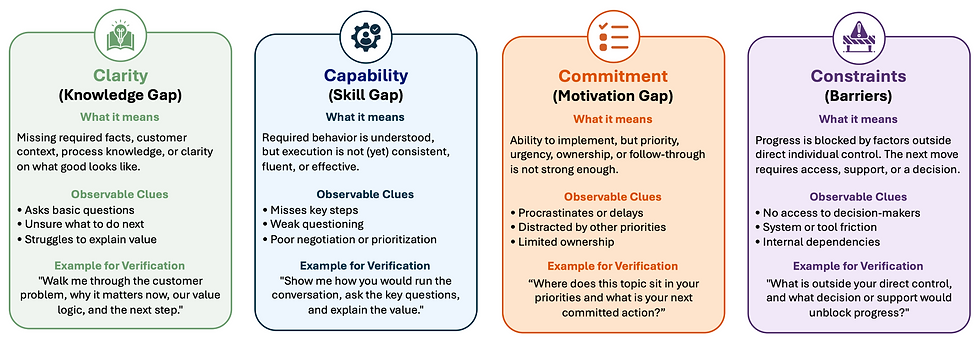
Chart 1: HCG’s 4C Sales Coaching Diagnostic®
1. Clarity: Do They Know What Good Looks Like?
Sometimes the problem is not effort or skill. It is a lack of knowledge or understanding.
The salesperson may not fully understand the customer situation, the stakeholder landscape, the value logic, the sales process and techniques, or the next best action.
You may see this when they ask basic questions, seem unsure what to do next, or struggle to explain the value clearly.
2. Capability: Can They Execute It Well?
Sometimes the salesperson understands what needs to happen, but cannot yet do it consistently or effectively. They know they should ask better questions, but their questioning stays superficial. They know they should connect to business value, but the explanation sounds generic. They know they should negotiate differently, but under pressure they fall back into discounting. You may see missed steps, weak questioning, poor prioritisation, or inconsistent execution. If they know what good looks like but cannot demonstrate it, you have a capability gap. That requires practice, feedback, role play, examples, and repetition.
Yes, repetition. The glamorous part of sales excellence, obviously.
3. Commitment: Do They Own It Enough?
Sometimes the sales person has the knowledge and the skill, but the ownership is not strong enough. They delay. They avoid difficult calls. They do the easy activity instead of the important one. They nod in the coaching conversation but do not follow through. You may see procrastination, low urgency, distraction, or limited ownership. This is where you need to coach accountability. Not aggressively. Not dramatically. But clearly. Support matters. So does ownership.
4. Constraints: What Is Blocking Progress?
Sometimes the salesperson is not the primary root cause of the sales performance gap. Progress may be blocked by something outside their direct control: lack of access to decision-makers, internal dependencies, unclear pricing rules, system friction, unavailable technical support, or a decision that needs to be made elsewhere. You may see stalled progress despite effort, repeated internal blockers, or situations where the next move requires support from someone else. If there is a constraint, your job is not to motivate the salesperson with another inspirational speech. Your job is to help unblock the system.
Why our 4C Diagnostic Matters
The 4C lens helps you avoid one of the most common sales management mistakes: treating every performance gap as a skill gap. It is not. Some gaps need explanation. Some need practice. Some need prioritization and accountability. Some need escalation or support.
If you misdiagnose the issue, your coaching will feel frustrating for both sides.
You will repeat yourself. They will feel misunderstood. The deal will not move.
And everyone will pretend the CRM update was progress. Before you give advice, ask yourself:
Is this a clarity issue?
Is this a capability issue?
Is this a commitment issue?
Is this a constraint issue?
That simple diagnostic discipline changes the quality of your coaching. It moves you from reacting to developing. It also makes your coaching more precise, fair, and useful. Because great sales coaching is not about having the answer fastest. It is about helping your sales people understand what is really getting in the way of better performance.
Use the Coaching Moments That Already Exist
Sales coaching does not need to become a heavy process. If coaching becomes too bureaucratic, you will avoid it and your team will resent it. The best coaching is practical, frequent, and connected to real work. You already have the coaching moments. The question is whether you use them well.
1. Before the Customer Conversation
2. During Opportunity Reviews
3. After Customer Meetings
4. In Skill Development
5. In Performance Conversations
Your role is not to inspect harder. Your role is to identify what must change.
Know When to Step In, and When to Stay Out
One of the hardest parts of sales management is restraint.
You see the mistake before the salesperson sees it. You know the better question. You can feel the deal drifting. You want to jump in. Sometimes you should. There are moments when customer value, commercial risk, strategic importance, or timing requires your direct involvement. Coaching is not an excuse for passive leadership. But if every difficult moment becomes your rescue mission, your team never develops the muscles it needs.
Before you step in, ask yourself:
Is this a moment to intervene, or an opportunity to develop?
What can the salesperson still own?
What question would help them see the issue?
What support do they need without removing accountability?
How do we protect the customer relationship and still build capability?
This is not soft leadership. It is disciplined leadership. It is the difference between solving one deal and improving the way your team sells.
Coach High Performers Without Slowing Them Down
Your high performers do not want generic coaching.
They do not want to be treated like beginners. They do not want theoretical models thrown at them by someone who has not earned their trust. And they definitely do not want coaching that feels like administrative control wearing a fake moustache.
So do not coach them that way.
Coach them on higher-value questions:
How can this account grow beyond the current opportunity?
Which executive relationships need to be strengthened?
Where can we create more strategic value?
What pattern in your success could be made repeatable for others?
Which deals are you winning through personal effort that could be won through better system discipline?
How can you raise the level of the team, not just your own number?
High performers should not be left alone simply because they perform.
They should be developed because they have the greatest potential to lift the whole commercial organisation.
Coach Lower Performers Without Carrying Them
Lower performers need clarity, structure, and honest feedback. They also need ownership. A common mistake is to either avoid the difficult conversation or over-help until you are effectively doing the job for them. Neither works.
Good coaching for lower performers is direct and supportive:
Define the specific performance gap.
Identify the behaviours behind the gap.
Agree on a small number of improvement priorities.
Practise the required skills.
Review progress frequently.
Hold the person accountable for their action.
Support without accountability creates dependency. Accountability without support creates fear. Your job is to provide both.
Make Coaching Part of Your Operating Rhythm
If coaching only happens when there is a crisis, you are not coaching. You are reacting.
Coaching needs rhythm. That does not mean endless meetings. It means building coaching into how the team already works. Use short, regular coaching moments. The point is not to add more noise to the sales organisation.There is already enough of that. The point is to improve the quality of the conversations you are already having. If your one-to-ones are only status updates, you are missing the opportunity. If your pipeline reviews are only forecast inspections, you are missing the opportunity. If your team meetings are only information cascades, you are missing the opportunity.
Every interaction is either reinforcing dependency or building capability. There is not much neutral ground.
The Question You Need to Ask Yourself
The central question is not: “How can I help my team close this deal?”
Sometimes that is the right short-term question. But it is not enough.
The better question is: “How can I help my team become better at creating customer value, deal after deal?”
That is the real standard. It moves you from expert to multiplier. From rescuer to developer.
From pipeline inspector to performance coach. From deal hero to team builder.
And in a value-based selling environment, that shift is not optional. Your team does not need you to be the answer to everything. They need you to help them develop better answers themselves. Because if you are always the answer, you are part of the problem.
👉 Curious to learn more about the art of effective coaching? Let us know.
the 4 C framework for diagnosing areas of development is very practical and help focus the coaching goals.